Find Modern Button Smart Door Lock with Fingerprint Recognition for Hotel, Office, and Home
Source 30 listings of the modern button smart door lock with fingerprint recognition suitable for hotels, offices, and homes. Buyers can compare specifications, pricing, and customization options from verified suppliers in China.
Key considerations
Products List


Smart Lock with Camera Video Recording Motion Detection Fingerprint Door Lock
$135.47 - $142.60
Moq: 100

Smart Door Lock with Fingerprint Keypad High Security Home Access Door Lock
$135.47 - $142.60
Moq: 100

Universal Smart Lock Fits Most Standard Doors Intelligent Fingerprint Code Lock
$158.49 - $164.45
Moq: 100


Comprehensive Sourcing Guide
Strategic Sourcing Guide for Modern Button Smart Door Locks with Fingerprint Recognition
Understanding the Technical Architecture and Core Functionality
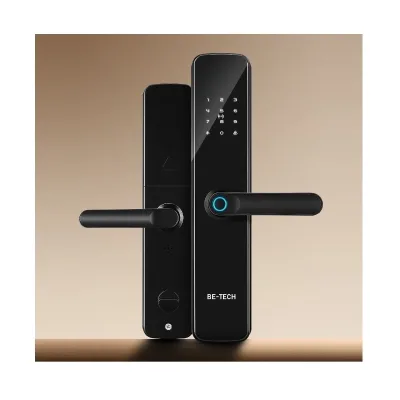
When sourcing a modern button smart door lock with fingerprint recognition, buyers must first distinguish between the underlying mechanical and electronic architectures. The product landscape includes distinct categories such as electromagnetic locks and mortise door locks, each serving different security profiles. The core functionality of these devices often relies on an electronically controlled locking principle, which can be configured as either fail-safe or fail-secure. A fail-safe mechanism ensures the door unlocks upon power loss, a critical feature for emergency egress in commercial settings, whereas a fail-secure lock remains engaged during a power outage, prioritizing asset protection over immediate egress.
The recognition technology is a primary differentiator in this category. Advanced units utilize biometric sensors capable of processing recognition within 0.5 seconds, significantly reducing queue times in high-traffic areas. The accuracy of these systems is equally vital; high-performance models report a false recognition rate of less than 0.001%, ensuring that unauthorized access is minimized while maintaining a seamless user experience. Buyers should verify that the specific unit they are considering supports the "button" interface, which often serves as a manual override or a tactile confirmation method alongside the biometric scanner.
Furthermore, the power architecture varies significantly across the market. While some industrial-grade locks operate on AC power, others rely on battery systems with external emergency power supplies, such as a Micro USB interface, to ensure functionality during a total power failure. The material composition also plays a crucial role in durability. High-quality units are frequently constructed from aluminum alloy or general alloys, providing resistance to corrosion and physical impact. The finish, often described as matt black or silver, is not merely aesthetic but indicates the surface treatment process used to protect the internal electronics from environmental degradation.
Compliance, Certification, and Standard Verification
In the B2B procurement of smart locking systems, compliance is not a suggestion but a prerequisite for market entry and insurance validity. Buyers must rigorously verify that the product meets the specific export standards required for their target region. While the general market often references "For Export" standards, the specific regulatory bodies vary by destination. For instance, European markets may require CE certification, while North American installations often look for UL or ANSI grades. It is critical to note that the presence of a "For Export" label does not automatically guarantee compliance with local building codes or fire safety regulations in the buyer's specific jurisdiction.
The certification process should extend beyond the electronic components to the mechanical housing. Since these locks are often installed in diverse environments ranging from warehouses to hospitals, the materials must withstand specific environmental stressors. Buyers should request documentation confirming that the aluminum alloy or alloy materials used meet international corrosion resistance standards. Additionally, the electronic components, particularly those involving wireless connectivity like Zigbee, Tuya WiFi, or Bluetooth, must comply with regional radio frequency regulations.
Verification of the "Product size customization" standard is also essential for large-scale projects. If the procurement involves retrofitting existing door frames, the lock must adhere to precise dimensional tolerances. The sourcing guide emphasizes that buyers should not assume a standard model will fit without verification. Instead, they must confirm that the supplier has the capability to provide custom sizing or that the selected model aligns with the specific door thickness and backset measurements of the installation site. The absence of specific certification numbers in general product descriptions should trigger a direct inquiry to the supplier for the relevant test reports and compliance certificates.
Cost Drivers and Pricing Dynamics
The pricing of modern button smart door locks is influenced by a complex interplay of factors, including material quality, electronic complexity, and customization levels. The observed market price range for these products spans from approximately $10.26 to $240, reflecting the vast difference between basic electronic locks and high-end, feature-rich biometric systems. The lower end of this spectrum typically covers standard mortise door locks with basic RFID or keypad functionality, while the upper end encompasses units with advanced fingerprint sensors, wireless integration, and robust alloy construction.
Material costs are a primary driver. Units constructed from high-grade aluminum alloy with a matt black finish generally command a higher price than those using standard alloys or different finishes. The inclusion of specific recognition technologies, such as those achieving a 0.5-second recognition time and a false recognition rate below 0.001%, adds significant value and cost to the unit. Similarly, the integration of optional functions like Tuya Zigbee, Tuya WiFi, or TT Lock compatibility requires additional hardware and software licensing, which increases the unit price.
The Minimum Order Quantity (MOQ) also impacts the effective cost per unit. The market observes an MOQ range from 1 to 100 units. Buyers purchasing small quantities may face higher per-unit costs, while bulk orders often unlock tiered pricing structures. Customization is another significant cost factor. While customization is available, requests for specific branding, unique color finishes, or non-standard dimensions can increase the unit price and extend the lead time. Buyers should also consider the packaging costs; options range from simple white boxes to more protective wooden cases or color boxes, which can influence the total landed cost, especially for heavy items with a single gross weight of up to 30.000 Kg.
Typical Applications and Deployment Scenarios
The versatility of modern button smart door locks with fingerprint recognition allows them to be deployed across a wide array of sectors. The application scope is extensive, covering community facilities, garages, companies, hotels, warehouses, parking structures, hospitals, campuses, supermarkets, enterprises, and public passages. In each of these environments, the specific requirements for the lock vary based on traffic volume, security sensitivity, and environmental conditions.
For commercial and enterprise settings, the fail-secure or fail-safe configuration is a critical decision point. In a warehouse or parking facility, a fail-secure lock ensures that goods remain protected even during a power outage. Conversely, in a hospital or public passage, a fail-safe mechanism is often mandated by fire codes to ensure occupants can exit freely during an emergency. The recognition time of 0.5 seconds is particularly beneficial in high-traffic areas like supermarkets or campus entrances, where minimizing congestion is essential for operational efficiency.
Residential and hospitality applications also benefit from these technologies. In hotels and households, the convenience of fingerprint access eliminates the need for physical keys, which can be lost or duplicated. The product attributes indicate suitability for bedrooms, channels, and office spaces, highlighting their adaptability to private and semi-private areas. The "Smart Lock" keyword often implies integration with broader building management systems, allowing for remote access control and audit trails. For projects requiring graphic design capabilities, such as custom branding on the lock faceplate, the supplier's project solution capability becomes a key differentiator.
Supplier Evaluation and Operational Capabilities
Evaluating a supplier for smart door lock procurement requires a deep dive into their operational capabilities and service offerings. The presence of ODM (Original Design Manufacturer) and OEM (Original Equipment Manufacturer) services indicates that the supplier can tailor products to specific brand requirements, from custom logos to unique functional configurations. Buyers should verify the supplier's location and origin, as these factors influence logistics, lead times, and communication efficiency. For example, suppliers originating from Jiangmen, Guangdong, or Hanzhong, China, may have established supply chains for specific components, but buyers must assess their ability to meet international shipping standards.
The service portfolio should extend beyond manufacturing to include technical support and after-sales service. Given the electronic nature of these locks, the ability to troubleshoot connectivity issues with Zigbee, WiFi, or Bluetooth modules is crucial. Buyers should inquire about the supplier's experience with the specific models mentioned, such as the DDEL028, RL-8100, or W001, to gauge their familiarity with the product line. The "Single Item" selling unit suggests flexibility for small orders, but for large-scale deployments, the supplier's capacity to handle bulk orders without compromising quality is paramount.
Additionally, the supplier's ability to provide comprehensive documentation is a key evaluation metric. This includes detailed technical specifications, installation manuals, and compliance certificates. The presence of a "Project Solution Capability" for graphic design suggests that the supplier can assist with branding and aesthetic customization, which is valuable for corporate clients seeking a unified look across their facilities. Buyers should also assess the supplier's response time and communication channels to ensure a smooth procurement process.
Quality Control and Long-Term Procurement Considerations
Maintaining high quality in smart door lock procurement requires a robust quality control (QC) framework. Buyers should implement a multi-stage QC process that includes pre-production sample verification, in-process inspections, and final random inspections. The focus should be on the mechanical integrity of the aluminum alloy or alloy construction, the reliability of the fingerprint recognition sensor, and the durability of the button interface. Testing for the false recognition rate of less than 0.001% and the 0.5-second recognition time should be conducted on a sample basis to ensure consistency across the batch.
Long-term procurement considerations involve planning for maintenance, firmware updates, and component availability. The electronic components in these locks, such as the Micro USB interface for emergency power or the wireless modules, may require firmware updates to address security vulnerabilities or improve performance. Buyers should verify that the supplier provides ongoing firmware support and has a clear policy for component obsolescence. The packaging, whether it is a white box, color box, or wooden case, should be evaluated for its ability to protect the product during transit and storage, especially for heavy items with a single gross weight of 30.000 Kg.
Furthermore, the scalability of the procurement strategy is essential. As the organization grows, the need for additional locks or upgrades may arise. A supplier with a strong track record in ODM/OEM services can facilitate this growth by offering consistent quality and design continuity. Buyers should also consider the environmental impact of the product, including the recyclability of the materials and the energy efficiency of the power consumption. By prioritizing these long-term factors, organizations can ensure a sustainable and secure locking infrastructure that meets their evolving needs.
Comparative Analysis of Product Attributes
To assist buyers in making informed decisions, the following table summarizes key attributes observed in the market for modern button smart door locks with fingerprint recognition. This comparison highlights the diversity in specifications, materials, and applications available to procurement professionals.
| Attribute Category | Feature A (High-End) | Feature B (Standard) | Feature C (Industrial) |
|---|---|---|---|
| Working Principle | Electronically Controlled Lock | Electronically Controlled Lock | Electronically Controlled Lock |
| Lock Type | Mortise Door Lock | RFID Card | Electromagnetic Lock |
| Material | Aluminum Alloy | Alloy | Aluminum Alloy |
| Recognition Time | 0.5s | Variable | Variable |
| False Recognition Rate | < 0.001% | Variable | Variable |
| Power Supply | AC / Micro USB Emergency | Battery / AC | AC |
| Connectivity | Zigbee / WiFi / Bluetooth | RFID Only | Wired / Optional Wireless |
| Finish | Matt Black / Silver | Silver | Matt Black |
| Application | Hotel, Hospital, Campus | Household, Office | Warehouse, Parking, Enterprise |
| Customization | Available (ODM/OEM) | Available | Available |
| Origin | Jiangmen, China | Hanzhong, China | Jiangmen, China |
| Packing | White Box / Color Box | Carton | Wooden Case |
This table illustrates that while the core technology remains consistent, the specific configuration varies based on the intended application. Buyers should use this matrix to align their procurement choices with their specific operational requirements, ensuring that the selected lock meets the necessary performance, security, and durability standards for their unique environment.
FAQs
How does the fail-safe or fail-secure function work?
The lock operates as either fail-safe or fail-secure based on the specific model configuration. Fail-safe units unlock during power loss for emergency egress, while fail-secure models remain locked to protect assets, making the choice critical for commercial versus residential applications.
What is the recognition time and accuracy rate?
Advanced units process fingerprint recognition in 0.5 seconds to reduce queue times in high-traffic areas. These systems maintain a false recognition rate of less than 0.001%, ensuring high security and a seamless user experience for both household and commercial door installations.
Which power options are available for these locks?
Some industrial-grade locks operate on AC power, while others utilize battery systems with external emergency power. Many models include a Micro USB interface to provide emergency power supply during total power failures, ensuring continuous functionality in critical environments like hospitals or warehouses.
Can the product be customized for specific projects?
Customization is available for branding, dimensions, and functional configurations to meet unique project requirements. Suppliers offer ODM and OEM services, allowing buyers to request specific color finishes like matt black or silver, as well as tailored packaging options such as wooden cases or color boxes.
What materials are used to construct the lock body?
High-quality units are frequently constructed from aluminum alloy or general alloys to ensure durability. These materials provide resistance to corrosion and physical impact, with finishes like matt black or silver protecting internal electronics from environmental degradation in diverse settings ranging from offices to public passages.
Where are these products typically manufactured and shipped from?
Products originate from locations such as Jiangmen, Guangdong, and Hanzhong in China. They are packed according to export standards, often in white boxes, color boxes, or cartons, ensuring safe transport for global markets while adhering to specific product size customization requirements.